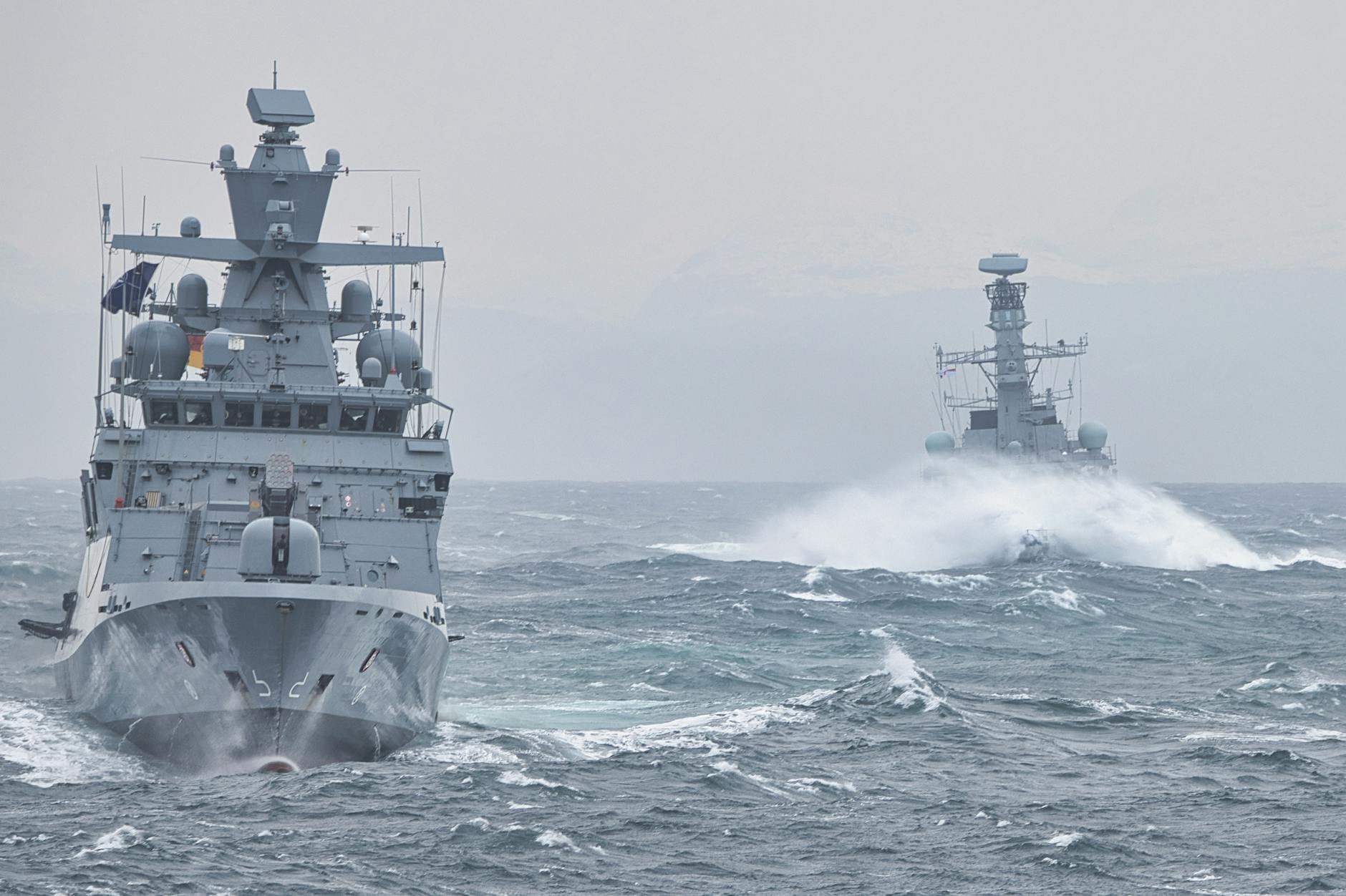
Wall Street demonstrated remarkable composure on Tuesday as investors digested the intensifying conflict between the United States and Iran, with major indices posting only marginal losses despite mounting geopolitical tensions. The measured market response suggests traders are cautiously watching developments in the Middle East while balancing war-related risks against corporate earnings and economic fundamentals.
Market Performance: Resilience in the Face of Conflict
The S&P 500 (SPY) slipped just 0.16% to close at $677.18, while the NASDAQ (QQQ) remained essentially flat at $607.77. The Dow Jones (DIA) edged down a mere 0.04% to $477.70. This muted reaction comes even as reports emerged that as many as 150 U.S. troops have been wounded in the ongoing Iran conflict, and the Trump administration disclosed that the war’s first two days have already cost taxpayers $5.6 billion.
The relative stability in equities stands in contrast to the energy markets, where the U.S. Energy Information Administration now projects Brent crude will trade above $95 per barrel for the next two months as the Iran conflict disrupts global oil supply chains. Questions surrounding safe passage through the Strait of Hormuz — a critical chokepoint for global oil shipments — continue to weigh on energy sector outlooks.
Geopolitical Developments Taking Center Stage
Tuesday’s headlines were dominated by war-related news. The White House confirmed that the U.S. Navy has not yet begun escorting commercial vessels through the Strait of Hormuz, raising questions about the security of international shipping lanes. Meanwhile, special envoy Steve Witkoff reported that Russia has assured President Trump it is not sharing U.S. military asset information with Iran — a development that could ease concerns about intelligence leaks but underscores the complex web of international relationships at play.
In a notable tech-defense intersection, Microsoft is pushing back against the Pentagon’s blacklisting of AI company Anthropic, requesting a court temporarily block the decision. The move highlights the increasingly blurred lines between Silicon Valley and national security interests during wartime.
Earnings Season: Mixed Results Across Sectors
Corporate earnings painted a mixed picture on Tuesday, with several companies beating expectations while others fell short:
Notable Beats
- Inland Real Estate (INR) delivered the day’s standout performance with EPS of $1.32, nearly doubling the consensus estimate of $0.68
- United Natural Foods (UNFI) posted EPS of $0.62, topping estimates of $0.52
- Finance of America (FOA) reported EPS of $0.69 against expectations of $0.66
- Domo Inc. (DOMO) swung to profitability with EPS of $0.03, beating the expected loss
- Custom Truck One Source (CTOS) came in at $0.09 EPS versus $0.07 expected
- Uranium Energy Corp (UEC) narrowed losses to -$0.03, better than the -$0.04 forecast
- Apyx Medical (APYX) limited its loss to -$0.03, outperforming the -$0.06 estimate
Disappointing Results
- Silvergate Capital (SI) posted a wider-than-expected loss of -$0.38 versus the -$0.33 estimate
- Esperion Therapeutics (ESPR) came in at $0.22, missing the $0.25 target
- Inspired Entertainment (INSE) reported a significant miss with a loss of -$0.18 against an expected profit of $0.27
- Consumer Portfolio Services (CPSS) earned $0.21, slightly below the $0.23 consensus
Analyst Moves and Tech Focus
Wall Street analysts are actively repositioning portfolios amid the conflict. CrowdStrike is being touted as a beneficiary of wartime cybersecurity spending, with some analysts citing three key reasons to buy shares during the current geopolitical uncertainty. Jim Cramer highlighted an unnamed AI stock as being “in the sweet spot,” while also previewing Nvidia’s upcoming GTC conference.
Meanwhile, Microsoft saw a ratings change as analysts reassess the tech giant’s prospects, and Boeing faces fresh scrutiny following its latest delivery delay — adding to the aerospace company’s troubled recent history.
Looking Ahead
As we move through the week, market participants will be closely monitoring developments in the Strait of Hormuz and any potential escalation in military operations. The combination of elevated oil prices, wartime spending, and corporate earnings will likely keep volatility elevated in the sessions ahead.
For now, the market’s measured response suggests investors believe the conflict remains contained — but that calculus could change rapidly with any significant military escalation or disruption to global energy supplies. Stay tuned for tomorrow’s briefing as this historic situation continues to unfold.
Leave a Reply